Local Citations for SEO: The Complete Guide to Building NAP Consistency and Map Pack Authority
If you have ever wondered why some businesses consistently appear at the top of Google's Map Pack while others remain invisible, the answer often comes down to one foundational element: local citations. Citations are among the most important ranking signals in Local SEO, yet they remain one of the most misunderstood.
This guide explains everything about local citations: what they are, how they influence Google's Map Pack algorithm, the different types of citations, how many you need, and how to build a citation strategy that creates lasting ranking improvements for your business.
Table of Contents
1. What Are Local Citations? 2. NAP Consistency: The Foundation 3. Types of Local Citations 4. How Citations Help Map Pack Rankings 5. How Many Citations Do You Need? 6. Manual vs. Automated Citation Building 7. Building an Effective Citation Strategy 8. Citations and AI Search Engines 9. Common Citation Mistakes to Avoid 10. Frequently Asked QuestionsWhat Are Local Citations?
A local citation is any online mention of your business's Name, Address, and Phone number (NAP) on a website other than your own. Citations most commonly appear on business directories (Yelp, Yellow Pages, BBB), social media platforms (Facebook, LinkedIn), data aggregators (Neustar Localeze, Data Axle), industry-specific directories, and local chamber of commerce websites.
Citations serve as independent verification of your business information. When Google crawls the web and finds your business data mentioned consistently across dozens or hundreds of trusted sources, it gains confidence that your business is real, located where you claim, and actively operating. This verification directly influences your position in Google's Map Pack results.
The concept is similar to references on a resume. A single reference is helpful, but when dozens of independent, credible sources all confirm the same information about your business, the cumulative effect is powerful.
Key Takeaway
Local citations are online mentions of your business NAP on directories and other websites. They serve as independent verification signals that Google uses to confirm your business information and determine Map Pack ranking positions. More consistent, high-quality citations lead to stronger ranking signals.
NAP Consistency: The Foundation of Citation Effectiveness
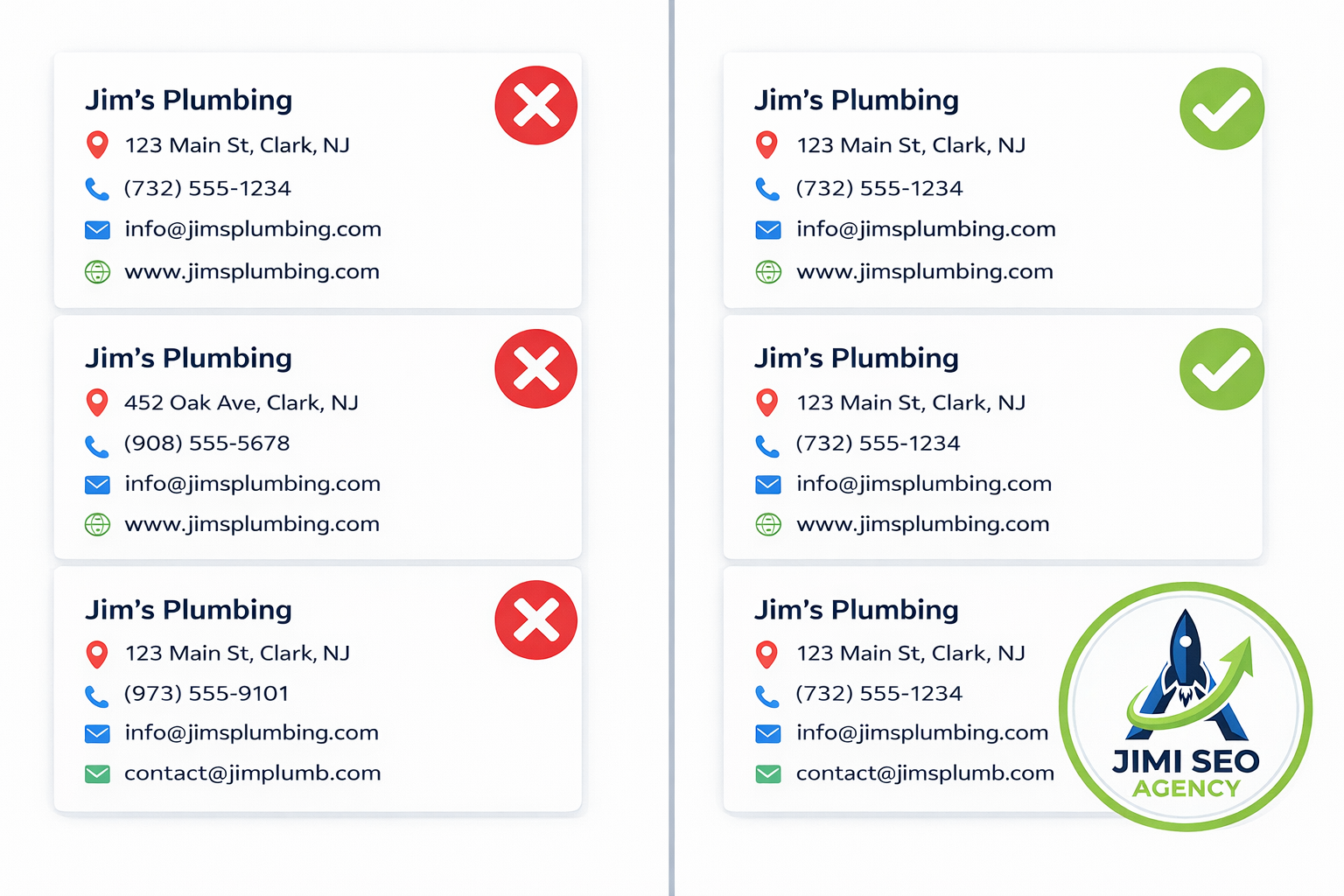
NAP consistency means that your business Name, Address, and Phone number are listed identically everywhere they appear online. This sounds simple, but in practice it is one of the most common problems in Local SEO.
Consider how many ways a business address can be written: "123 Main Street, Suite 200" vs. "123 Main St., Ste. 200" vs. "123 Main St Suite 200." To a human, these are obviously the same address. But to Google's algorithm, each variation creates uncertainty. Multiply this across hundreds of directory listings, and the cumulative inconsistency can significantly weaken your citation signals.
Common NAP inconsistencies that hurt rankings include:
- Using different phone numbers (main line vs. tracking number vs. mobile)
- Abbreviating street names differently across directories
- Listing an old address that was never updated after a move
- Using a DBA or trade name on some sites and the legal name on others
- Including or omitting suite/unit numbers inconsistently
- Listing different website URLs (with www vs. without, HTTP vs. HTTPS)
Before building new citations, a thorough citation audit should identify and correct all existing inconsistencies. Building new citations on top of inconsistent existing data compounds the problem rather than solving it.
Types of Local Citations
Not all citations carry equal weight in Google's algorithm. Understanding the different categories helps you build a citation profile that maximizes ranking impact.
Structured Citations
Structured citations are formal business listings on directories with defined fields for business name, address, phone number, website URL, business hours, and categories. These are the most common and most impactful type of citation. Examples include Google Business Profile, Yelp, Facebook Business, Yellow Pages, BBB, Foursquare, and hundreds of other directory platforms.
Unstructured Citations
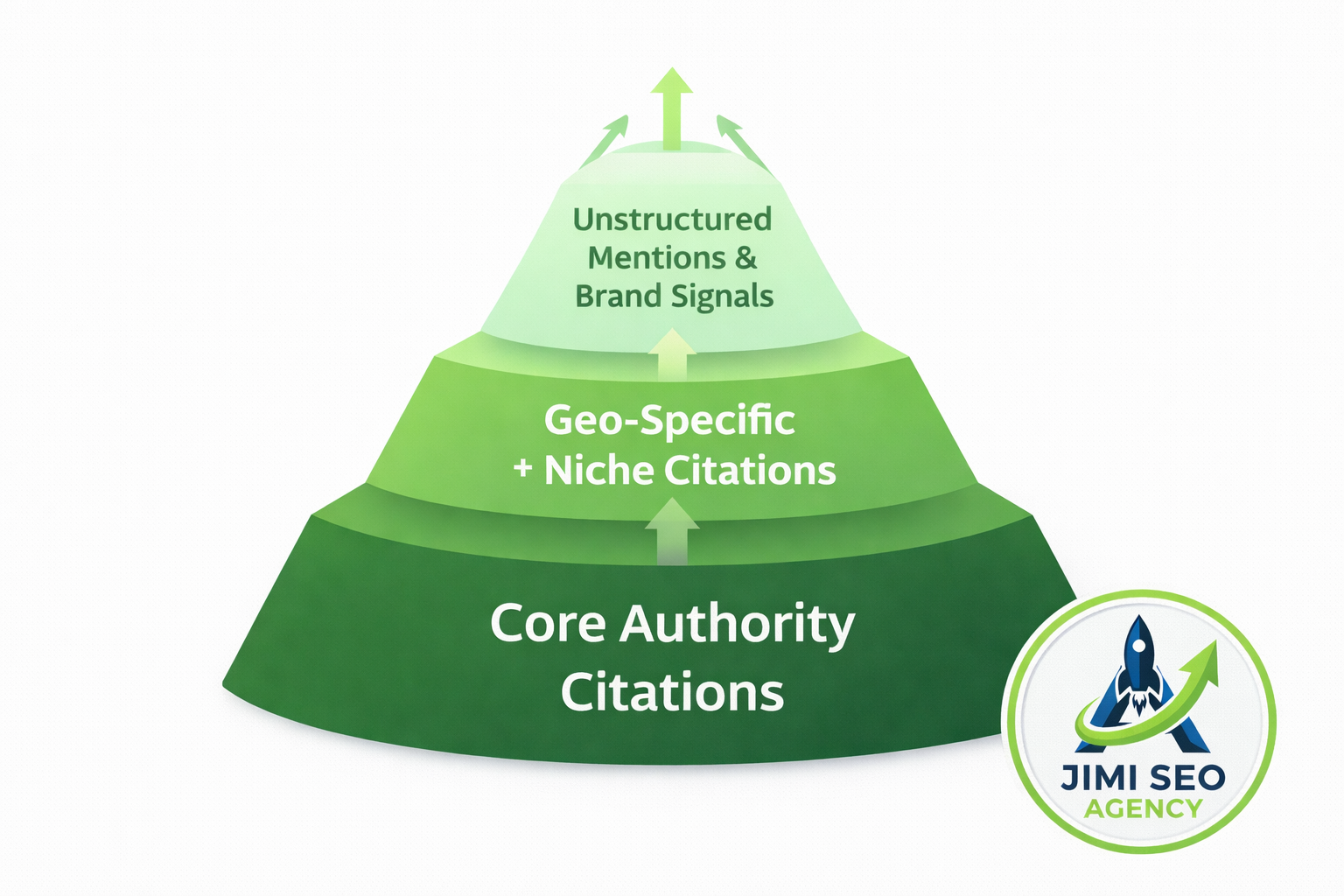
Unstructured citations are mentions of your business information within blog posts, news articles, press releases, event listings, or other web content where your NAP data appears in natural text rather than a formal listing format. While individually less powerful than structured citations, they add diversity and authenticity to your citation profile.
Core Authority Citations
These are citations on the highest-authority, most widely trusted directories that every local business should be listed on regardless of industry. They include Google Business Profile, Yelp, Facebook, Apple Maps, Bing Places, BBB, Yellow Pages, Foursquare, and similar platforms that Google consistently crawls and trusts.
Geo-Specific Citations
These are citations on directories that target a specific geographic area: city business directories, county chamber of commerce sites, state business registries, and regional listing platforms. They create strong geographic relevance signals that connect your business to a specific service area. A business serving Clark, NJ would benefit from Union County business directories, New Jersey state listings, and Newark/Central Jersey regional platforms.
Niche Industry Citations
Industry-specific directories carry additional topical relevance because they confirm your business category to Google. A law firm benefits from legal directories (Avvo, FindLaw, Justia). A restaurant benefits from food-service platforms (OpenTable, TripAdvisor, Zomato). A contractor benefits from home-improvement directories (Angi, HomeAdvisor, Houzz).
| Citation Type | Purpose | Examples | Impact |
|---|---|---|---|
| Core Authority | Foundation trust signals | Google, Yelp, Facebook, BBB | High |
| Geo-Specific | Location relevance | City directories, chamber sites | High |
| Niche Industry | Category relevance | Avvo, Houzz, Healthgrades | High |
| General Directories | Volume and diversity | Yellow Pages, Foursquare, Hotfrog | Medium |
| Unstructured | Natural mention signals | Blog posts, news articles | Supporting |
How Citations Help Map Pack Rankings
Citations influence your Map Pack ranking through multiple signal pathways that work together to build your local search authority.
Business Verification
When Google finds your NAP data on multiple independent, trusted sources, it gains confidence that your business is legitimate and operating at the stated location. This verification is a prerequisite for Map Pack visibility. Businesses with thin or inconsistent citation profiles often struggle to rank even with other strong signals.
Geographic Relevance
Citations on geo-specific directories create location signals that help Google understand exactly which areas your business serves. A business with citations on Clark NJ directories, Union County platforms, and New Jersey state listings sends strong geographic signals that reinforce its service area claims in the Google Business Profile.
Category Confirmation
When your business appears on industry-specific directories with consistent category information, it confirms your business type to Google. This supports the relevance factor in Google's local algorithm, helping you rank for searches related to your specific services.
Authority Accumulation
Each citation on a high-authority directory passes a measure of that directory's trust to your business. Citations on Yelp (domain authority 90+), Facebook (domain authority 95+), and BBB (domain authority 90+) carry significantly more weight than citations on obscure, low-authority directories.
Key Takeaway
Citations work through four signal pathways: business verification, geographic relevance, category confirmation, and authority accumulation. A comprehensive citation strategy targets all four pathways by building on core authority directories, geo-specific platforms, and niche industry sites with perfectly consistent NAP data.
How Many Citations Does a Local Business Need?
The number of citations needed depends on your market's competition level. There is no universal number that works for every business, but here are research-backed guidelines based on our experience managing 100+ client campaigns:
Low Competition Markets (small towns, niche services with few competitors): 30 to 50 citations on core authority and relevant niche directories are often sufficient to establish a strong citation foundation.
Moderate Competition Markets (mid-sized cities, common service categories): 100 to 150 citations provide the volume and diversity needed to compete effectively. This should include core authority, geo-specific, and niche industry citations.
High Competition Markets (major metros like New York, Los Angeles, Chicago; saturated categories like personal injury law, dentistry, restaurants): 200 to 300+ citations are typically needed, with emphasis on geo-specific directories for each neighborhood or borough within your service area.
Quality always matters more than quantity. 100 manually built, NAP-consistent citations on relevant directories will outperform 500 automated submissions to low-quality platforms with inconsistent data.
Manual vs. Automated Citation Building
This is one of the most important decisions in citation building, and it has a direct impact on your ranking results.
Automated Citation Tools
Automated tools promise to submit your business to hundreds of directories instantly. While this sounds efficient, the reality is problematic. Automated tools frequently create inconsistent NAP data across listings, produce duplicate entries that confuse Google, submit to low-quality or irrelevant directories, cannot verify that each listing was properly published and approved, and offer no customization for geo-specific or niche directories.
Manual Citation Building
Manual citation building means a human creates each listing individually, verifying NAP accuracy in real-time, selecting directories based on relevance to your industry and location, ensuring no duplicates are created, and confirming each listing is live and properly formatted. This approach takes more time but produces dramatically better results because every citation sends a clean, consistent signal to Google.
At Jimi SEO Agency, every citation we build is 100% manual. Our team individually creates each listing, verifies NAP consistency against your master business data, and delivers a full report documenting every citation with its URL and status. This manual approach is why our clients see sustained ranking improvements rather than temporary spikes followed by corrections.
Building an Effective Citation Strategy
A successful citation strategy follows a specific sequence for maximum impact:
Step 1: Citation Audit
Before building anything new, audit your existing citations. Identify inconsistencies, duplicates, and incorrect listings. Clean these up first, because building new citations on top of inconsistent existing data weakens rather than strengthens your profile.
Step 2: Core Authority Citations
Ensure your business is listed on every major authority directory with perfectly consistent NAP data. These high-authority platforms form the foundation of your citation profile and are the directories Google checks first.
Step 3: Geo-Specific Citations
Build citations on directories specific to your city, county, and state. These create the geographic relevance signals that are essential for Map Pack visibility in your service area.
Step 4: Niche Industry Citations
Identify and build citations on directories specific to your industry. These confirm your business category and add topical authority that general directories cannot provide.
Step 5: Supporting Citations
Fill in your profile with additional general directories and data aggregators that Google crawls. Combined with Google Authority Stacking, link building, and map embeds, these supporting citations complete your local search presence.
Citations and AI Search Engines
The rise of AI-powered search systems makes citation consistency more important than ever. When an AI assistant like Google's AI Overviews, Perplexity, or ChatGPT with browsing looks up local business information, it pulls data from the same directory network that Google uses for Map Pack rankings.
If your business has consistent NAP data across 200+ directories, AI systems can confidently verify and recommend your business. If your citation profile is thin or inconsistent, AI systems may skip your business entirely in favor of competitors with stronger, more consistent data.
Citations are not just a Google Map Pack strategy. They are the infrastructure that makes your business discoverable and verifiable across every search platform, including the AI-powered systems that are rapidly growing in usage.
Common Citation Mistakes to Avoid
Based on auditing hundreds of businesses, these are the most common citation mistakes that actively harm Map Pack rankings:
Using tracking phone numbers inconsistently: If you use call tracking, ensure the tracking number is used as the primary number everywhere, or use your main number everywhere. Mixing them creates NAP inconsistency.
Neglecting to update after a move or rebrand: Old address or business name data on existing citations creates conflicting signals. Every citation must be updated when business information changes.
Building citations too fast with automation: A sudden surge of hundreds of low-quality citations can trigger spam filters. Organic, manual citation building over time produces more natural and effective signals.
Ignoring duplicate listings: Having two or more listings for the same business on the same directory confuses Google and divides your ranking signals between the duplicates. Duplicates must be identified and removed.
Focusing only on quantity: 50 citations on relevant, high-authority directories with perfect NAP consistency will always outperform 500 citations on irrelevant, low-quality directories with inconsistent data.
Key Takeaway
The most effective citation strategy starts with an audit to fix existing problems, then builds systematically from core authority directories to geo-specific and niche platforms. Manual building ensures NAP consistency, and quality always outweighs quantity. Citations also serve as the data infrastructure for AI search engine visibility.
Frequently Asked Questions

Muhammad Jamil
Founder of Jimi SEO Agency with 9+ years of Local SEO experience. Has built 50,000+ manual citations for 100+ clients across 50+ industries. Based in Clark, NJ. View our citation building packages.
Ready to Build Your Citation Foundation?
Start with 30 citations for just $5, or go comprehensive with 300 citations for $30.